

Dry Needling in Cape Town.
Dry needling for muscle pain, sports injuries and recurring tightness
Dry needling may be used as part of care for neck pain, back pain, headaches related to neck tension, shoulder pain, hip pain, calf tightness, running injuries and sports-related muscle pain.
At Dr Hilton Lazar Chiropractic in Tamboerskloof, dry needling is used alongside assessment, manual therapy, movement advice and exercise where appropriate.
The aim is to reduce sensitivity, improve movement and help you understand what is driving the problem.
-
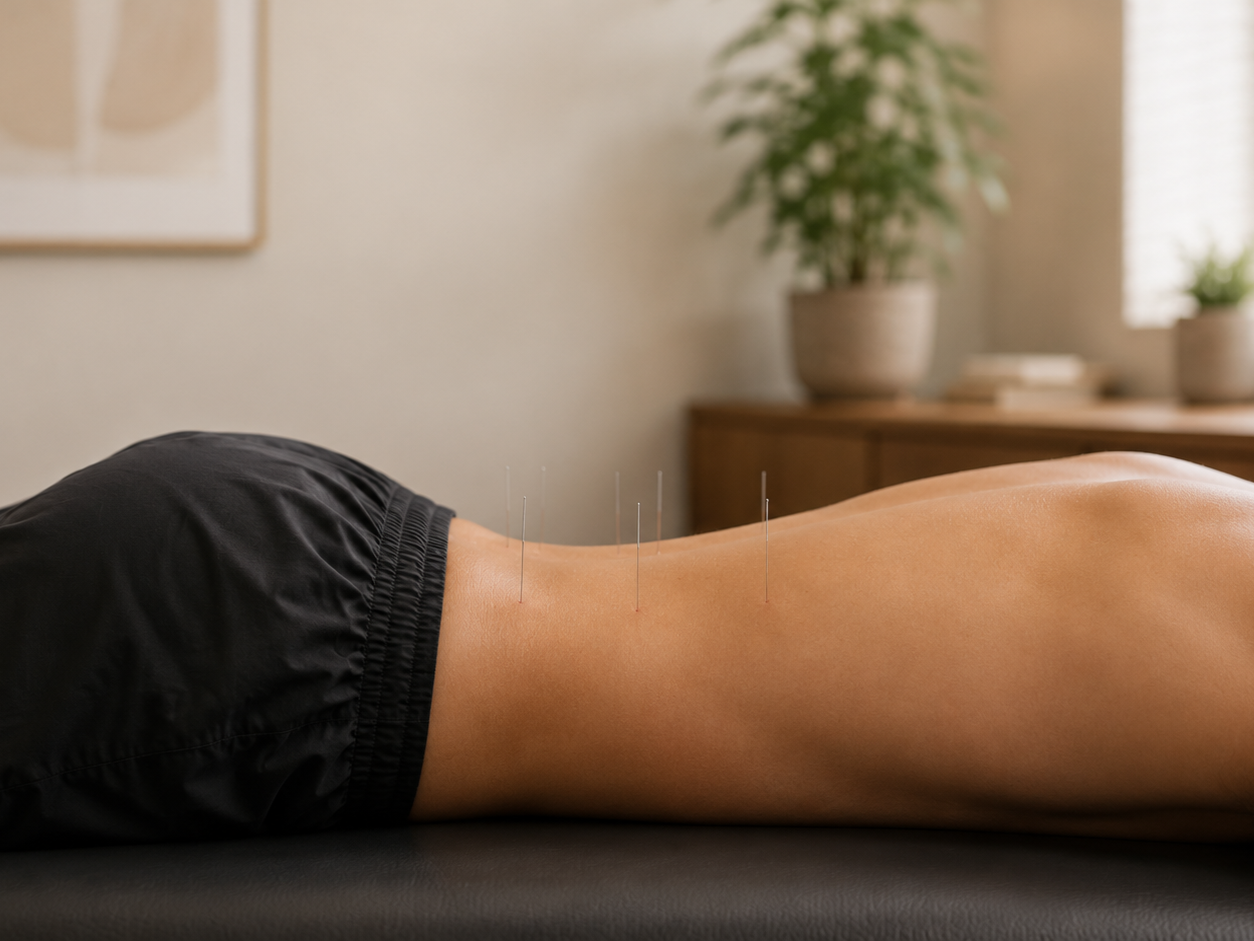
Dry needling is a treatment for muscle pain, trigger points, and movement restriction. It uses fine, sterile needles to stimulate irritated soft tissue, helping to reduce pain, release muscle tension, and improve mobility
-
The only similarity is that they use thin, fine filament needles. Philosophically, the WHY behind the two practices are very different. Dry needling is based on neurophysiology and Western medical science.
-
Dry needling can be used as part of treatment for muscle and joint pain, sports injuries, trigger points, headaches, neck and lower back pain, Sciatica, shoulder pain, hip and knee pain, tendon-related pain, and restricted movement
-
When done by skilled practitioner the insertion of the needle should be painless (that’s why we use thin and sharp needles). What you might feel is a twitching sensation in the muscle, dull aching or radiating sensation. The sensation associated with the needling is not one of an injection like pain.
-
The majority of patients experience a noticeable increase in the mobility of the area that was treated and a reduction in the sensitivity. Certain areas of the body (Muscle fibre type dependent) can have post needling stiffness and sensitivity which is remedied by the application of heat and gentle mobility exercise
-
My Vision for chiropractic care is a systems based approach to the body. Treating joints without treating the muscle that moves the joints is leaving half the system out. It helps improve the efficiency of the adjustments, gets people moving sooner and cuts the treatment times down. In the majority of cases there is a tangible treatment effect which is important because patients feel like something has “shifted/changed". It is by far the most effective tool i have used to treat people with back pain, arm pain and leg pain with direct effects.
-
Light movement is usually fine after dry needling, and many people feel better with gentle activity.
Hard training, heavy lifting, or intense running may be better left for the following day, especially if the treated area feels sore. The advice depends on the reason you are being treated and what you are training for.
-
This depends on the condition, how long the symptoms have been present, and whether the underlying load or movement issue is being addressed.
Some people respond within one or two sessions. Others need a short treatment plan combined with exercise, load management, or changes to training habits.
-
Dry needling can be useful for runners and active people when muscle sensitivity, overload, or protective tightness is contributing to pain.
It is not a replacement for good training management. For running injuries, I usually look at the bigger picture, including training load, strength, mobility, recovery, footwear, and the specific pain pattern.